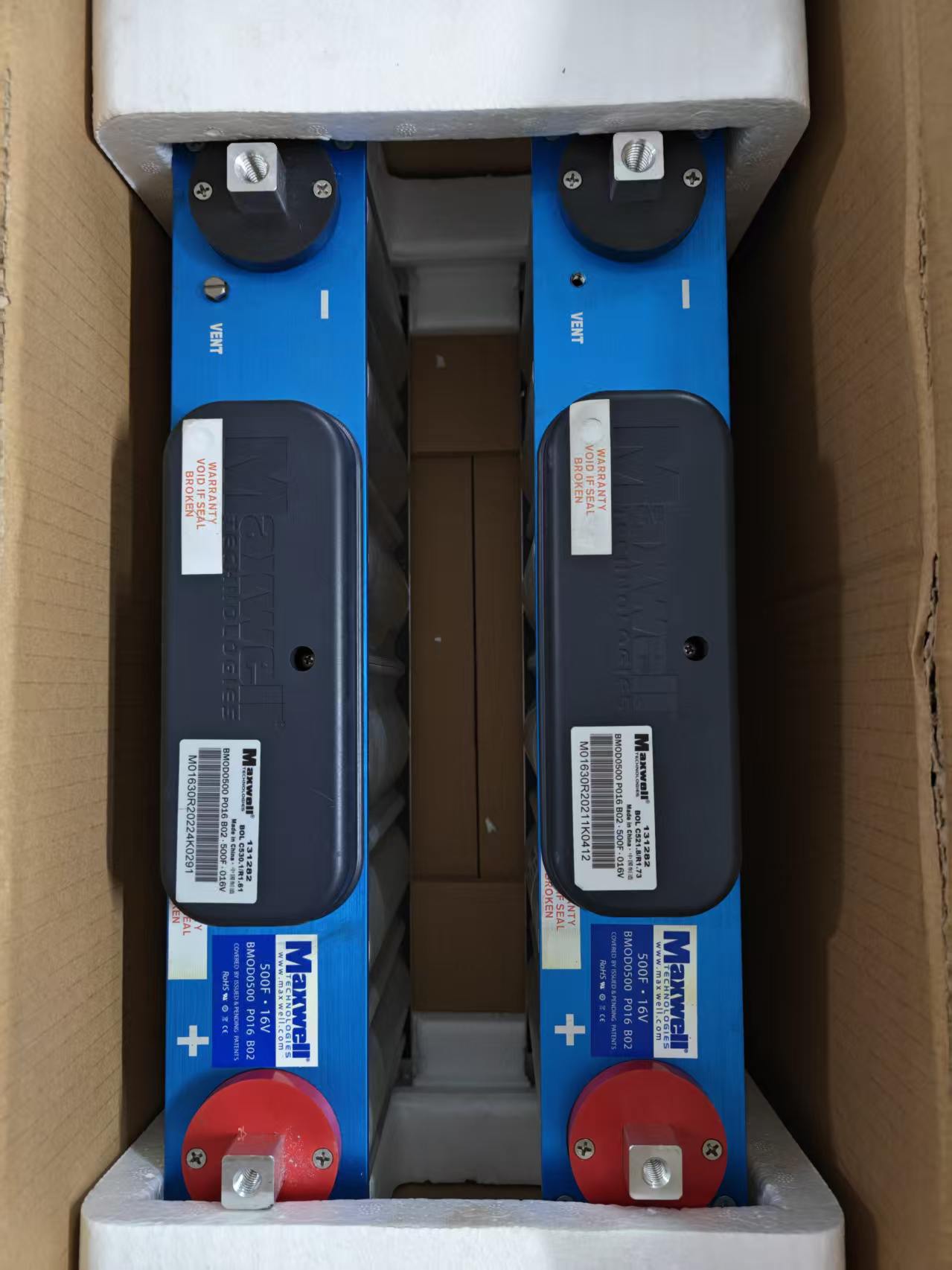
Uninterruptible Power Supply (UPS) systems protect critical loads from power disturbances, but traditional battery-based UPS systems have significant limitations: short cycle life, high maintenance, temperature sensitivity, and environmental disposal concerns. EDLC supercapacitors offer a compelling alternative for short-duration UPS applications, providing instant power, virtually unlimited cycle life, and zero maintenance. In this guide, we cover everything you need to know about designing and deploying supercapacitor-based UPS systems.
Why Supercapacitors for UPS?
Most power disturbances are very short — voltage sags, swells, and brief outages lasting from milliseconds to tens of seconds. For these short-duration events, supercapacitors are far superior to batteries:
| Parameter | Supercapacitor UPS | Battery UPS (VRLA) |
|---|---|---|
| Ride-through time | 1–60 seconds (typical) | 5–30 minutes |
| Cycle life | 500,000–1,000,000 cycles | 200–1,000 cycles |
| Charge time | Seconds to minutes | 8–24 hours |
| Maintenance | None (sealed, no electrolyte checks) | Quarterly (voltage, impedance, temperature) |
| Temperature range | -40°C to +65°C | -15°C to +50°C (optimal 20–25°C) |
| Replacement cycle | 10–20 years | 3–5 years |
| Environmental | No heavy metals, recyclable | Lead-acid requires special disposal |
| Total cost (10yr) | Lower (no replacements, no maintenance) | Higher (2–3 battery replacements) |
UPS Applications Where Supercapacitors Excel
1. Generator Start Bridging
The most common supercapacitor UPS application is bridging the gap between utility power failure and backup generator startup. Typical generator start time is 5–30 seconds — well within supercapacitor capability. A 16V 100F module can provide 500W–1kW of backup power for 10–20 seconds, sufficient for most generator bridging applications.
2. Industrial Process Control
PLCs, DCS systems, and industrial controllers require clean, uninterrupted power to prevent process interruption and data loss. A brief power sag can cause an entire production line to shut down, costing thousands of dollars in lost production and restart time. Supercapacitor UPS provides instant, reliable ride-through for these critical control systems.
3. IT and Data Center Ride-Through
For server racks and data centers, supercapacitor UPS provides enough ride-through time for graceful shutdown or transfer to standby generators. While batteries are still needed for long-duration outages, supercapacitors handle the vast majority of power disturbances (which are <30 seconds), reducing battery cycling and extending battery life.
4. Medical Equipment
Diagnostic equipment, laboratory instruments, and patient monitoring systems require stable power. Supercapacitor UPS provides maintenance-free backup for these applications, eliminating the risk of battery failure during critical procedures.
5. Telecommunications
Cell towers, base stations, and network equipment require reliable backup power. Supercapacitor UPS handles short-duration power fluctuations, while batteries or generators handle extended outages. This hybrid approach reduces maintenance visits to remote cell sites.
Sizing a Supercapacitor UPS System
Proper sizing ensures your supercapacitor UPS provides adequate ride-through time for your load. Follow these steps:
Step 1: Determine Load Power (P)
Calculate the total power your critical load requires, including power factor and efficiency losses:
P = Load Power (W) = Voltage (V) × Current (A) × Power Factor
Add 20–30% margin for inrush current and future expansion.
Step 2: Determine Required Ride-Through Time (t)
How long does the UPS need to provide power? Typical values:
- Generator bridging: 10–30 seconds
- Graceful shutdown: 30–120 seconds
- Short sag ride-through: 1–5 seconds
Step 3: Determine Voltage Range (ΔV)
Supercapacitors discharge from rated voltage down to a minimum voltage determined by your DC-DC converter or inverter input range. Typical range:
- 16V module: 16V → 8V (50% depth of discharge)
- 48V module: 48V → 24V (50% depth of discharge)
Using 50% DoD provides the best balance of capacitance utilization and voltage stability.
Step 4: Calculate Required Capacitance
C = 2 × P × t / (V_max² − V_min²)
Example: A 500W industrial controller requiring 20 seconds ride-through, using a 16V module discharging from 16V to 8V:
C = 2 × 500 × 20 / (16² − 8²) = 20,000 / (256 − 64) = 20,000 / 192 = 104F
A 16V 100F module would be suitable, providing approximately 19 seconds of ride-through at 500W.
Supercapacitor UPS System Architecture
A typical supercapacitor UPS system includes:
- AC-DC rectifier/charger — Converts AC line power to DC, charges supercapacitor bank
- Supercapacitor bank — Energy storage (cells or modules in series-parallel)
- DC-DC converter — Regulates supercapacitor voltage to stable DC bus
- DC-AC inverter — Converts DC to AC for AC loads (optional, for DC loads skip this)
- Transfer switch — Seamlessly switches between utility and backup power
- Control and monitoring — Voltage, current, temperature monitoring; charge/discharge control; communication (RS485, CAN, Ethernet)
Hybrid Supercapacitor-Battery UPS
For applications requiring both short-duration ride-through and long-duration backup, a hybrid architecture combines the best of both technologies:
- Supercapacitor handles all short-duration events (<60 seconds) — voltage sags, swells, brief outages, generator start bridging
- Battery handles only extended outages (>60 seconds)
This hybrid approach reduces battery cycling by 90%+, extending battery life from 3–5 years to 7–10 years, and reducing maintenance costs. The supercapacitor also provides instant power transfer, eliminating the typical 2–10ms transfer time of battery UPS systems.
Maintenance and Reliability
Supercapacitor UPS systems are virtually maintenance-free:
- No electrolyte checks — Sealed cells, no watering required
- No equalization charging — Unlike lead-acid batteries
- No thermal runaway risk — Supercapacitors do not undergo exothermic chemical reactions
- Self-discharge monitoring — Modern systems monitor cell voltage and balance automatically
- Recommended inspection — Annual visual inspection and voltage verification
Conclusion
Supercapacitors are an excellent choice for short-duration UPS applications, offering instant power delivery, virtually unlimited cycle life, zero maintenance, and lower total cost of ownership compared to battery-based systems. Whether you need generator start bridging, industrial process control backup, or hybrid battery-supercapacitor architecture, EDLC supercapacitors provide reliable, maintenance-free backup power for critical applications.
Need help sizing a supercapacitor UPS system for your application? Contact our engineering team via WhatsApp with your load specifications, and we'll recommend the optimal supercapacitor module configuration with wholesale pricing and worldwide shipping.