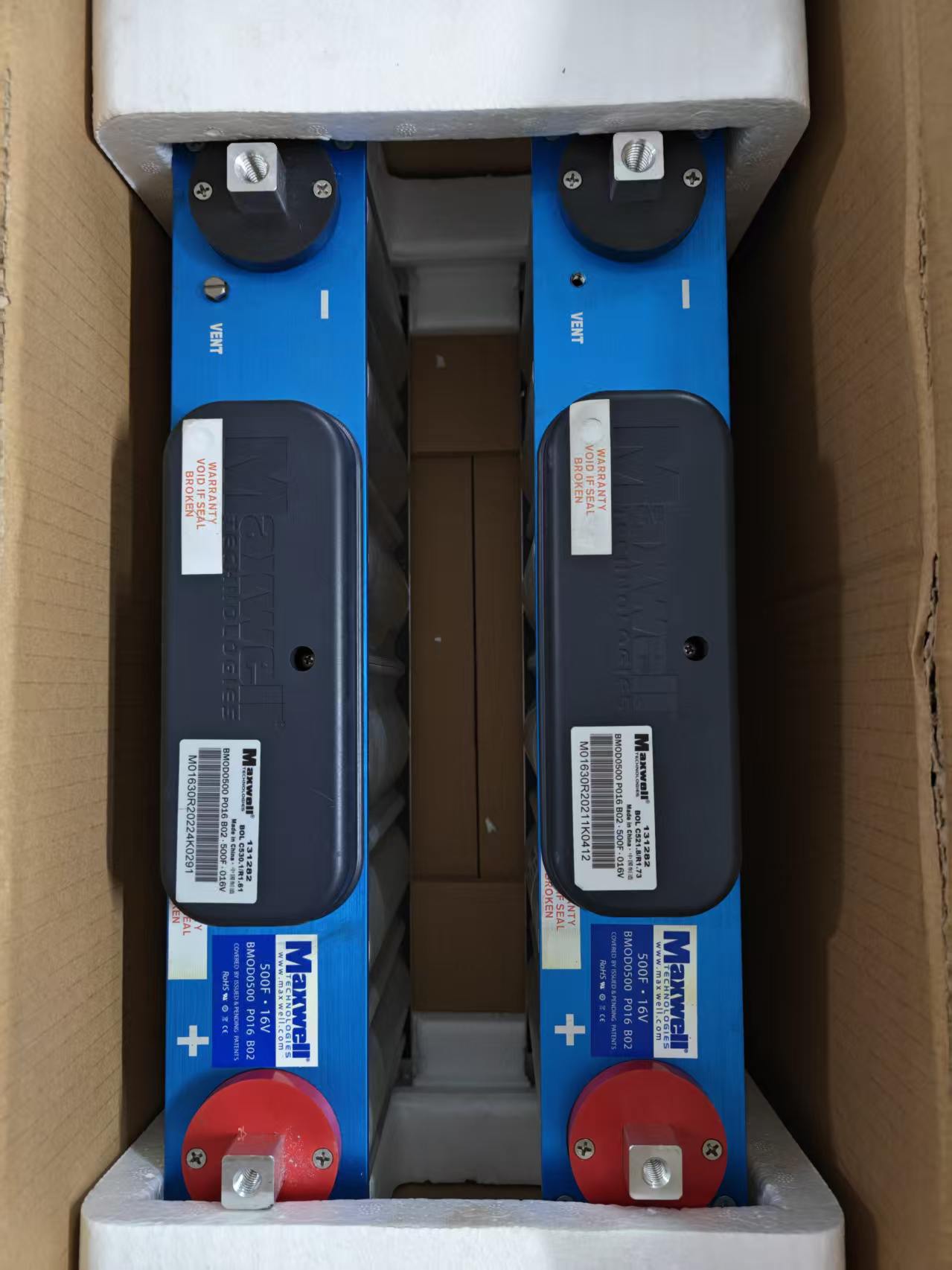
One of the most common questions we hear from buyers is: "Are used supercapacitors safe?" It is a valid concern — buying second-hand electronic components always carries risk. However, because EDLC (Electric Double-Layer Capacitor) supercapacitors have extremely long cycle lives (500,000 to 1,000,000 cycles), properly tested used units can be a safe and cost-effective choice. In this guide, we explain how supercapacitors age, what tests to require, and how to buy used stock with confidence.
Why Supercapacitors Age Differently from Batteries
Unlike lithium-ion batteries that degrade through chemical reactions and electrode material breakdown, EDLC supercapacitors store energy electrostatically. This means they do not suffer from the same chemical aging mechanisms. However, supercapacitors do degrade over time, primarily through:
- Electrolyte evaporation — Slow loss of electrolyte through seals, especially at high temperatures
- Electrode oxidation — Gradual degradation of the activated carbon electrode surface
- ESR increase — Internal resistance rises as the electrolyte and electrodes degrade
- Capacitance fade — Gradual loss of usable capacitance, typically 10–20% over 5–10 years of normal operation
The good news: these aging processes are slow and predictable. A supercapacitor that has been in service for 3–5 years may still retain 80–90% of its original capacitance and have only slightly elevated ESR — perfectly usable for most industrial applications.
Essential Tests for Used Supercapacitors
Before purchasing used supercapacitors, always require the following test data. A reputable supplier will provide test results for every batch.
1. Capacitance Measurement
Capacitance is the most fundamental parameter. It should be measured using a constant current charge-discharge method per IEC 62391 standard. The capacitance is calculated as:
C = I × Δt / ΔV
Where I = discharge current, Δt = time between voltage thresholds, ΔV = voltage drop. Acceptance criterion: capacitance should be at least 80% of rated value. Below 80%, the cell has experienced significant degradation and should be rejected.
2. ESR (Equivalent Series Resistance) Measurement
ESR determines the power delivery capability of the supercapacitor. It is measured using the AC impedance method at 1 kHz, or the DC current step method. Acceptance criterion: ESR should be no more than 150% of the rated value. Higher ESR means reduced peak current capability and increased heat generation under load. For high-power applications (UPS, automotive), require ESR within 120% of rated.
3. Leakage Current Test
Leakage current indicates the health of the dielectric and electrolyte. Charge the supercapacitor to rated voltage and measure the current after 30 minutes. Acceptance criterion: leakage current should be within manufacturer specifications (typically 1–5 mA for large cells). Excessively high leakage current indicates internal degradation or damage.
4. Appearance and Physical Inspection
Visual inspection is critical. Reject any unit with:
- Bulging or swollen casing (indicates gas generation from overvoltage or overheating)
- Corroded or damaged terminals
- Cracks or dents in the casing
- Evidence of electrolyte leakage (white residue around seals)
- Missing or damaged safety vents
- Severe discoloration or burn marks
5. Cycle Test (Spot Check)
For large batch purchases, request a spot cycle test on a sample of cells. Perform 10–20 charge-discharge cycles and verify that capacitance and ESR remain stable. Significant changes during cycling indicate unstable, degraded cells.
How XDXT Electronics Tests Every Used Capacitor
At XDXT Electronics, we take used capacitor quality seriously. Every used supercapacitor that leaves our warehouse undergoes the following inspection process:
- Visual inspection — Every cell is examined for physical damage, bulging, corrosion, and leakage
- Capacitance test — Measured per IEC 62391 standard; cells below 80% rated capacitance are rejected
- ESR test — Measured at 1 kHz; cells above 150% rated ESR are rejected
- Leakage current check — Verified after 30-minute charge at rated voltage
- Labeling and grading — Passed units are labeled with test date, measured capacitance, and measured ESR for full traceability
We only ship qualified units. Contact us via WhatsApp to request current used stock with complete test data.
Applications Where Used Supercapacitors Are Ideal
Tested used supercapacitors are particularly well-suited for:
- UPS backup systems — Short-duration bridging power, where cycle life matters more than absolute capacitance
- Solar power smoothing — Fluctuation absorption, frequent cycling
- Industrial peak shaving — Short high-current bursts
- Prototyping and R&D — Cost-effective for testing and development
- Budget-constrained projects — Where 80–90% performance at 40–60% cost makes sense
When to Buy New Instead of Used
Used supercapacitors are not appropriate for every application. Buy new when:
- You need guaranteed maximum performance (aerospace, medical, safety-critical systems)
- The application requires the full rated capacitance and minimum ESR
- You need manufacturer warranty and traceability
- The project has strict quality certification requirements (ISO, IATF, etc.)
- Long-term reliability (10+ years) is critical and cannot tolerate any degradation
Tips for Buying Used Supercapacitors Safely
- Always request test data — Capacitance, ESR, and leakage current measurements for the specific batch
- Ask for photos — Inspect physical condition before purchasing
- Start with a sample order — Test a few units before committing to a large quantity
- Verify the supplier — Look for established suppliers with a track record in used electronics
- Understand the grading — Ask how the supplier grades used units (A/B/C grade) and what criteria are used
- Factor in derating — Design your system assuming 80% of rated capacitance and 150% of rated ESR
Conclusion
Used EDLC supercapacitors can be a safe, reliable, and cost-effective choice — if they are properly tested. Because supercapacitors age slowly and predictably, tested units with 80%+ capacitance and reasonable ESR can deliver years of reliable service. The key is to buy from a reputable supplier who provides complete test data and performs thorough inspection.
At XDXT Electronics, we stand behind every used capacitor we sell. Contact us via WhatsApp for current used stock availability, complete test reports, and wholesale pricing. We frequently have tested 2.7V 3000F, 2.7V 1200F, and 16V 500F modules in stock at competitive prices.